
King William Current Owner Card
The Commissioner of the Revenue keeps a Vision card for every parcel, and it is the county's fastest view of the owner of record for assessment purposes. Fields include owner, mailing address, and situs address. The Tax Map Number, GIS ID, and account number sit alongside values, sale references, and property attributes. Treat the owner line as a starting point. Sample card views may not display a selected owner's name in their text output. Open the live card for the parcel instead. Then check it against the newest recorded transfer.
| Owner field | Name attached to the assessed parcel |
|---|---|
| Tax Map / GIS ID | Parcel keys to carry into map and clerk searches |
| Mailing address | Destination for tax correspondence |
| Situs address | Physical location of the parcel |
| Transfer history | Sale dates and book or volume-page references shown on the card |
| Assessment date | Card context that must be compared with the latest deed date |
The mailing address is not proof of residence. The situs address is not where the owner's mail goes. A trust, LLC, estate, or fiduciary may hold title. The card may carry that legal name instead of a person. Vision's landing information has carried a warning. That warning says ownership data may date to October 1, 2020. Use the county's current-card link instead. It leads to the active record. Read the date printed on the selected card before trusting the owner line. Compare that date with the latest recorded deed. Only then is the owner truly current. The official county card instructions lead to the current Vision card portal.
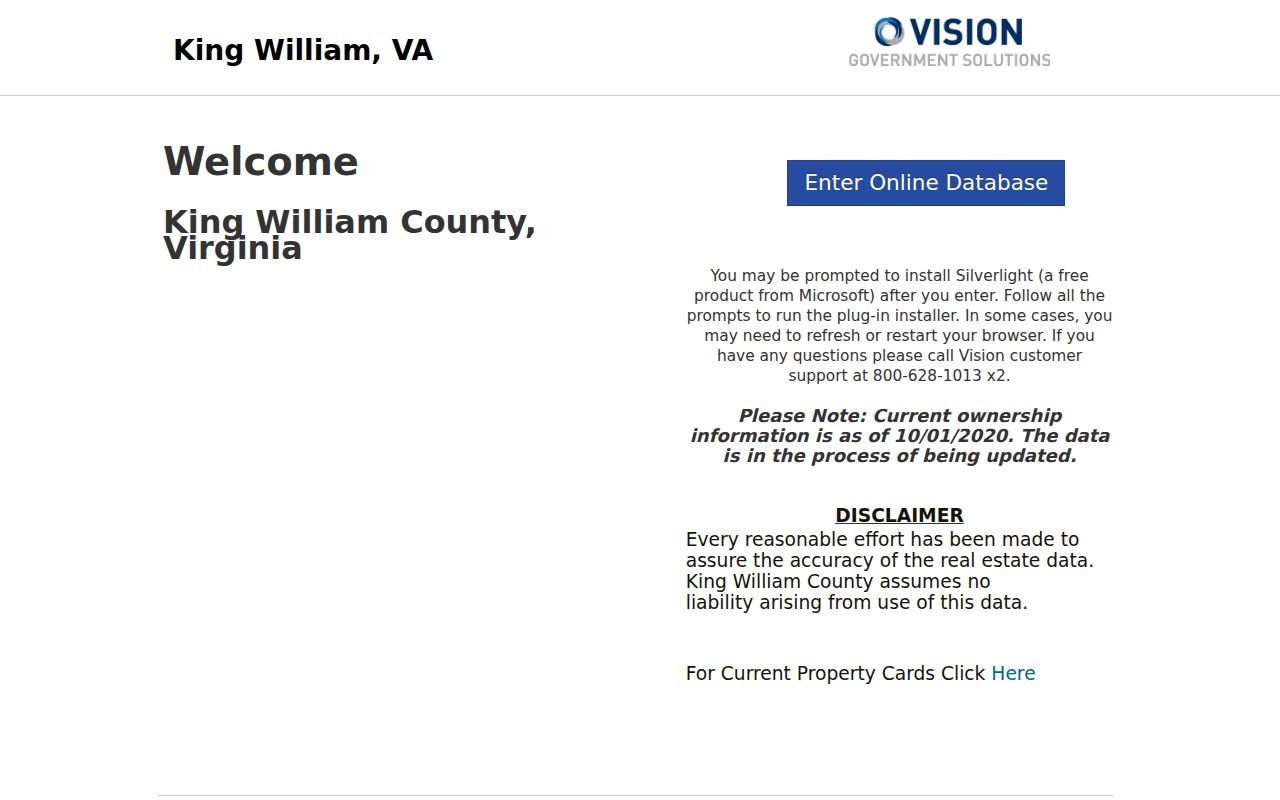
Use the selected card for owner and date. The portal view here shows that context rather than any named owner's personal record.
Confirming Today's King William Owner
Two sources matter because an assessment roll and a deed index do different jobs. The card is a tax-office snapshot. The deed is a recorded transfer. Take the owner name and Tax Map Number, find the latest instrument, read the grantee and vesting, and match the legal description to the parcel. A very fresh deed may lag on the card. For the instrument route, the Clerk's land-record page links to SRA/COVERS.
- Open the current card link and locate the parcel by address, owner, or Acct#.
- Record the owner name, Tax Map Number, GIS ID, card date, mailing, and situs fields.
- Search the owner as grantee in the Clerk's index and inspect the newest matching deed.
- Compare the deed's legal description and grantee with the assessment card before treating the name as current.
- Owner of record
- The name shown in the county assessment record.
- Vesting
- The way the deed states that title is held by its grantee.
- Grantee
- The person or entity receiving the interest in a recorded instrument.
King William January First Billing Name
The Treasurer's billing information says a real-estate bill is mailed in the name of the owner as of January 1. That billing name is useful for understanding whose name appears on a tax notice, but it does not prove that no deed was recorded later in the year. A new deed may be in the Clerk's index before the next assessment or billing update. If the question is who owns the property now, compare dates instead of relying on a bill name alone.
Tax billing and title confirmation are separate steps. The Treasurer can answer whether a bill was issued, paid, or delinquent. The Commissioner can explain the assessment card and a factual correction. The Clerk can confirm the deed instrument. Keep the question directed to the office responsible for that record.
County billing rules are described at Billing Information; payment records are linked from the Treasurer's tax portal page.
King William Entity and Estate Owners
The owner field may name a trust, LLC, estate, or fiduciary. Read the deed's vesting language first. Then map that label to a person. For estate property, the Clerk's Wills & Deed Division keeps wills and fiduciary records, and the SRA agreement lists will-book index and books from 1885 forward. Older transfers may need historic books or Library of Virginia reels. A card name alone is thin evidence.
The county posts no public probate-search field list. Ask the Clerk which will, qualification, fiduciary, or court record exists. Confirm the exact spelling and date first. For an LLC or other business, the Virginia SCC offers an entity search. Check its fields and URL at the official state source. A mailing address shows where mail goes. It cannot confirm a person's role.
King William Parcel Keys for Owner Checks
The Vision card keeps its Tax Map Number, GIS ID, and account number separate. That separation matters when confirming the current owner. The Clerk, GIS, and assessment portals may show different identifiers for the same parcel. Copy the full Tax Map string, letters and all. Compare the GIS ID and account number. Never swap one number for another. An owner check is stronger when the same legal description follows across every source.
A recent boundary adjustment or parcel split can change the tax map key. The county's boundary application asks for parcel number, zoning, address, acreage, and a surveyed plat. Check any resulting recording with the Clerk. Ask the Commissioner how the card was updated. The public GIS viewer is a helpful locator but not final proof of the exact boundary or ownership.
The county's GIS and map page provides the map context for matching a card to land.
West Point Current Owner Check
Check the parcel's county first. A West Point mailing address does not settle the question. The Town's boundary crosses into King and Queen County. ZIP 23181 is a postal label, not a jurisdiction. So the deed index and assessment card you need may sit in a different county entirely, even though the envelope says West Point. The Town itself can still hold permits or zoning files for that same property.
Place the parcel with its Tax Map Number and legal description. That combination shows which side of the line it falls on. Be careful with owner names on town paperwork. A permit application may list an applicant or an agent. That person may not be the grantee named in the deed. Before treating any town file as a title record, compare the Clerk's recorded instrument against the county assessment card. That is the sound way to confirm who owns the parcel of record.
King William Deed Activity Alerts
Virginia offers a subscription service called VADeed Alert. It can notify a voluntary subscriber when recorded activity matches a name or a Tax Map and Parcel ID. Think of it as a follow-up step after a current owner check. It will not interpret a filing for you. It also cannot guarantee that every name variation will match. When an alert flags something unfamiliar, the owner should open the Clerk's SRA record and call the office with questions.
The service lives at Virginia VADeed Alert. Alerts and the assessment card do different jobs. One can flag a future record. The other displays the tax-office owner of record along with the parcel information.
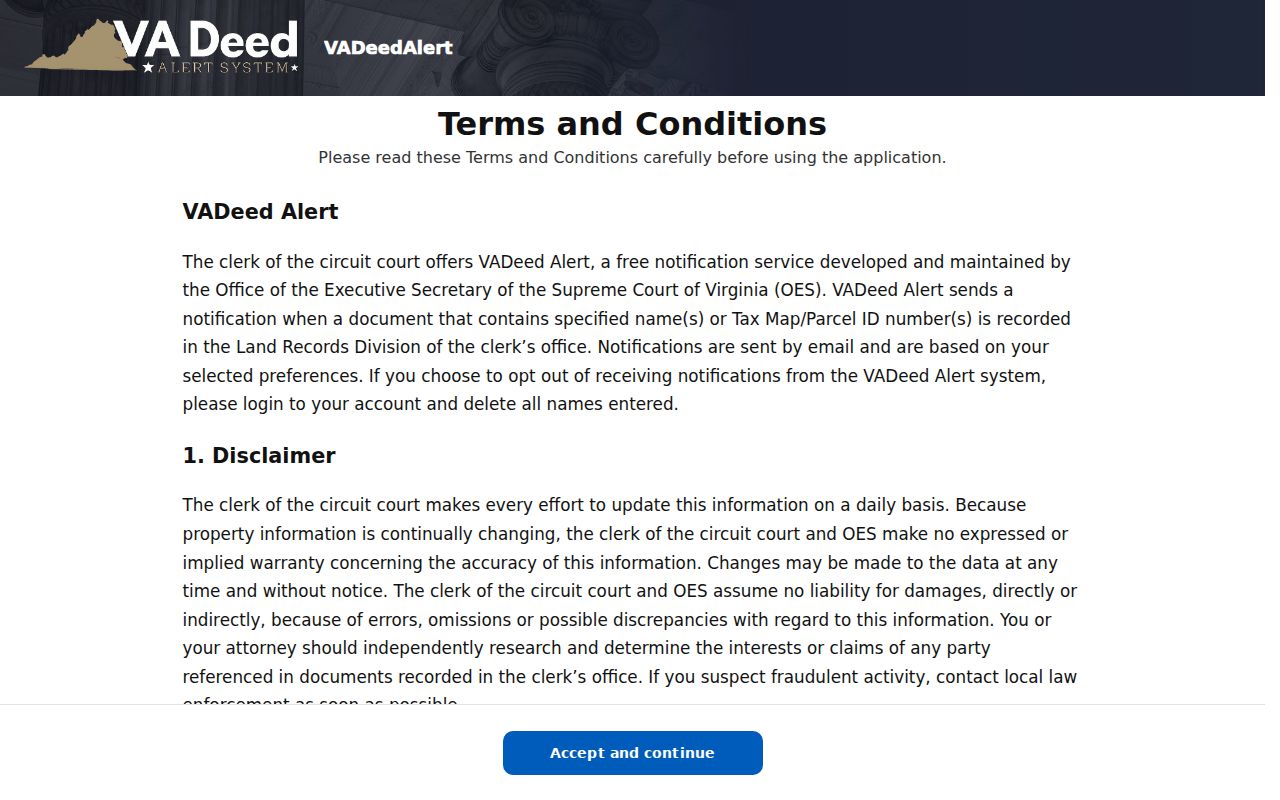
Open the matching instrument itself before deciding what a new filing means for the current owner.
Contacting a King William Owner
For a routine property matter, the county publishes the owner's mailing address right on the tax record. That is the contact route to use. Keep the purpose relevant and lawful. Remember that the owner field says nothing about who occupies the property, and a public record should never be used to locate or target someone outside the matter at hand. The county Clerk also instructs filers to leave Social Security numbers out of land-record documents.
What if a mailing address looks stale? Contact the custodian rather than circulating the information. The same goes for a factual error in a public record. A records request can ask for an existing item. But Virginia FOIA does not force an office to create a new analysis or verify title for a requester.
Lawful use. Contact a King William County owner only for a legitimate property matter. Do not use an owner name or mailing detail to stalk, harass, intimidate, or harm anyone.