
King William Deed Record Types
Deeds of sale are only the start. King William County deed records also cover deeds of trust, assignments, certificates of satisfaction, plats, judgments, UCC filings, mechanics-lien releases, and memoranda of lis pendens, all handled by the Clerk's Land Records Division. A recorded instrument proves what was filed. Its legal effect depends on the text and on related records. Find the item in the index first. Then read the instrument and its legal description before calling it an ownership change.
| Deed Type | What It Does | Common Use |
|---|---|---|
| Deed or conveyance | Transfer and legal description of land | Confirm parties, date, and parcel description |
| Deed of trust | Security instrument tied to a debt | Search with the owner and lender |
| Assignment | Transfer of an interest in an instrument | Follow the named beneficiary or assignee |
| Certificate of satisfaction | Release of a described secured debt | Match it to the related deed of trust |
| Plat | Surveyed depiction of lots, lines, or easements | Compare with the deed legal description |
Each instrument does a different job. A deed transfers a land interest. A deed of trust only secures an obligation and transfers nothing by itself. An assignment moves the interest to another party. A certificate of satisfaction releases the identified debt. Plats map the land and may record easements, road dedications, or lot divisions. The Clerk's Land Records page lists the instruments and forms it accepts. A real title review must trace related filings and releases. It must also cover court matters, not just the newest deed.
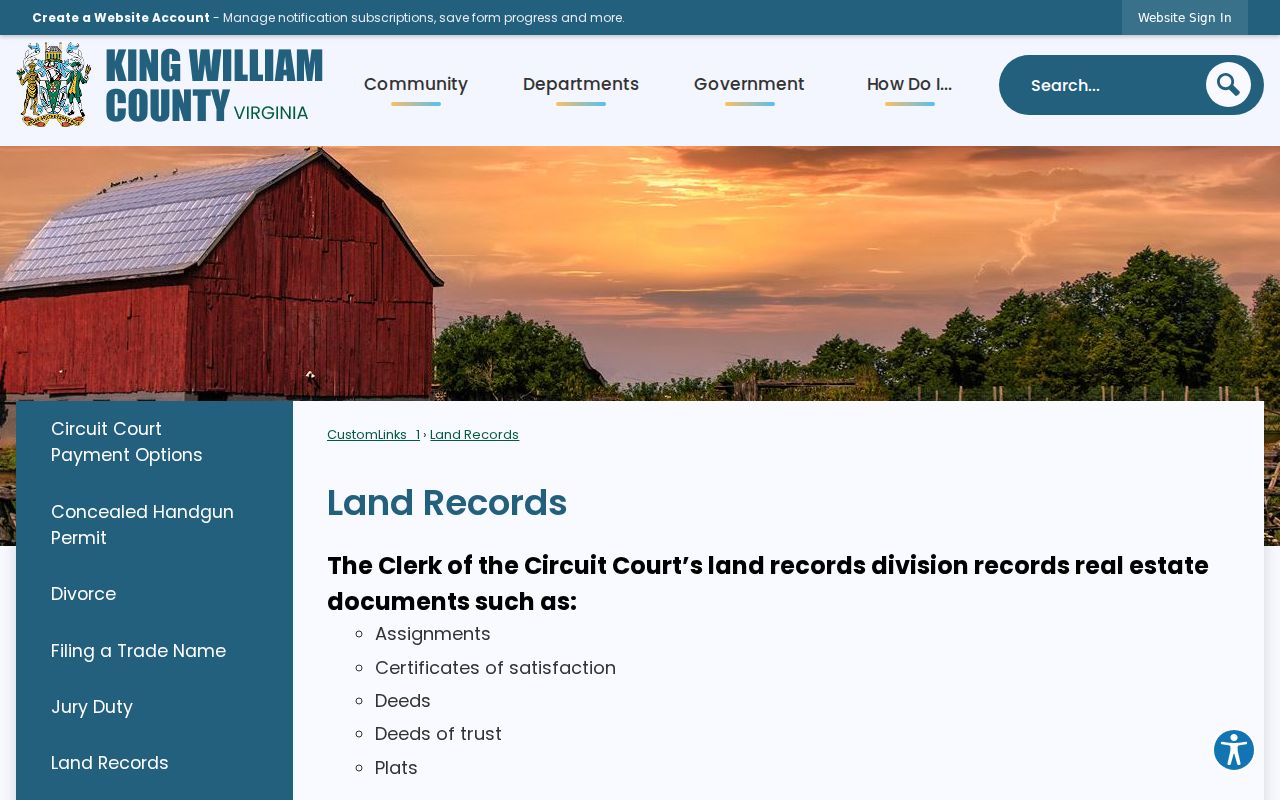
The Clerk's list helps separate an ownership instrument from a lien, release, or map kept in the same land-record system.
Tracing the King William Deed Index
Think of the deed index as a party trail. The grantor conveys the interest. The grantee receives it. Start with the latest grantee or owner of record, find the acquisition deed, then use its grantor and prior reference to step one link back. Search spelling variants and initials. A name may be indexed differently across a person, trust, estate, or company, so weigh the parcel number and legal description along with the names. King William County's online deed index begins in 1885, though exact portal field labels and options need confirmation in SRA.
- Search the current owner's name as grantee and locate the latest acquisition deed.
- Read the grantor, date, legal description, Tax Map reference, and prior book or instrument detail.
- Search that grantor as a grantee in an earlier date range and compare the property description.
- Repeat until the index stops, then use surviving deed books, microfilm, probate, or court records for the older link.
- Grantor
- The person or entity conveying the recorded interest.
- Grantee
- The person or entity receiving the recorded interest.
- Chain of title
- The linked sequence of recorded transfers and related title documents.
- Book and page
- A volume reference used in older records; newer results may carry instrument details.
King William SRA Search Coverage
Virginia SRA/COVERS is the online route the Clerk names. King William's subscriber agreement lists a deed index from 1885 to present, deed images for 1874 to 1886 and 1928 forward, selected other record images for 1816 to 1822, 1870 to 1871, and 1879 to 1881, all plat books, and judgment and UCC coverage from 1999. Index coverage and image coverage are separate things. An index hit can stand even when no image is online.
Free index-only access may be available when the local Clerk enables it. Images go only to subscribers the Clerk authorizes, through an agreement and an advance fee. The King William agreement calls for a printed, notarized application submitted online through SRA or in person. Do not assume every year or document class behaves the same way. Start from the state portal at Virginia SRA/COVERS.
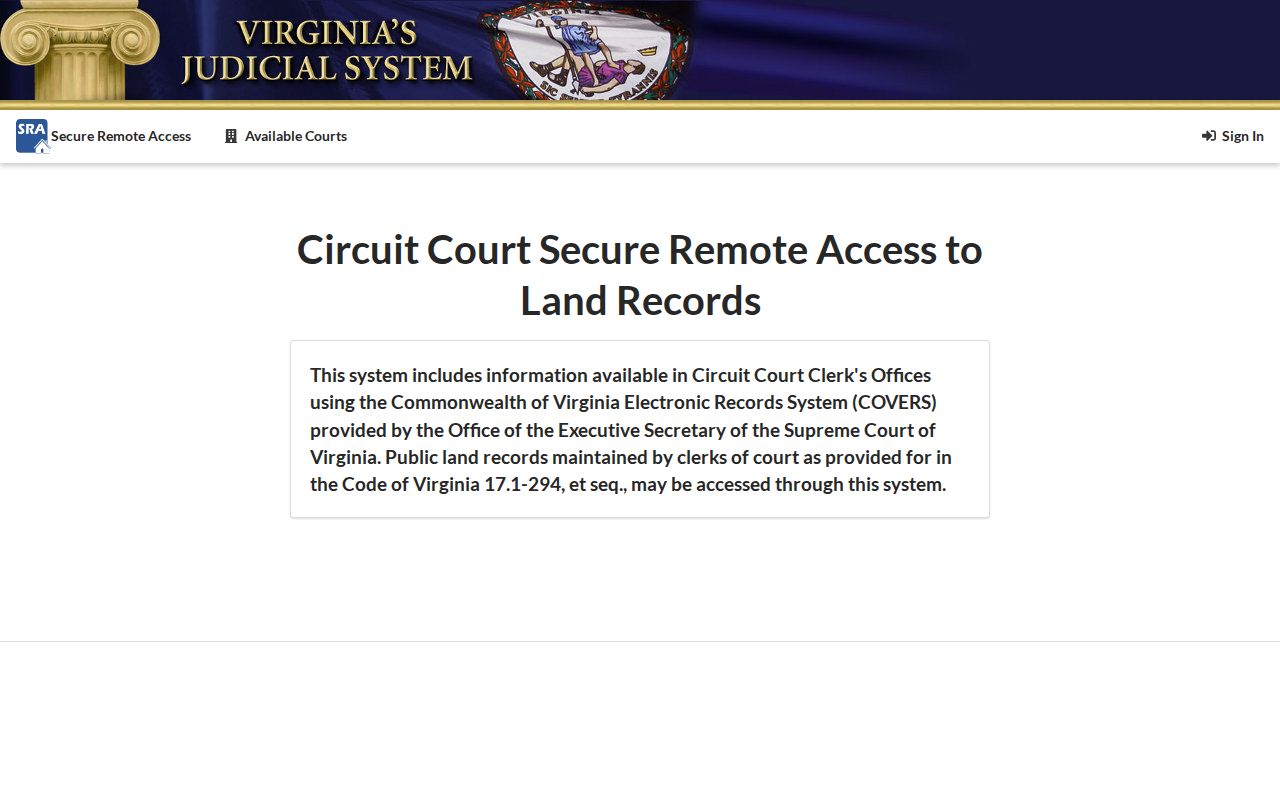
The portal supplies the index and the subscriber image path; the Clerk can steer a search to the local counter when a result is missing.
King William's Fire and Book Gaps
Fires struck the courthouse in 1864 and 1885, destroying some records. Other books were saved. What survives is not a clean line from the first deed to today's database. The Library of Virginia lists Deed Book 1 for 1702 to 1705. Deed Book 2 covers 1793 to 1802. Deed books run from 1885 forward. County court records also reach back to 1702. A missing SRA image may reflect a digitizing gap or a lost book. It may also be a record held in another series.
When the chain breaks, track three things separately. Track the online index result, whether the image or bound book still exists, and other proof in a plat, will, fiduciary account, or court file. The Library of Virginia catalog lists a General Index to Deeds, Release Deeds, Miscellaneous Liens, and Wills for 1885 to 1981. It also lists tax books from 1813 to 1816 and fiduciary records. Ask the Library about interlibrary loan for reel 43 and related reels. Ask the Clerk to confirm which volumes remain locally.
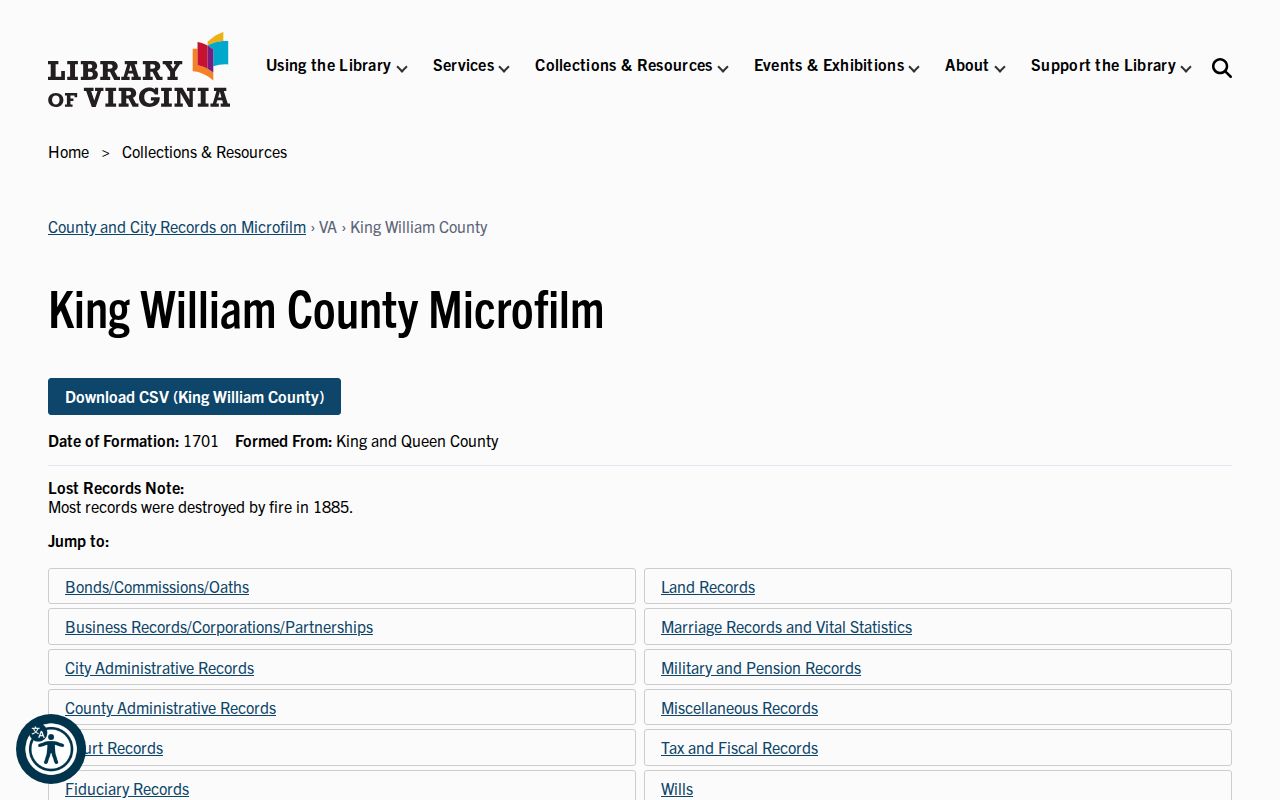
The finding aid covers court, tax, and probate series that can explain a transfer when a deed-to-deed chain falls short.
Recording a King William Deed
Recording works differently from a past-deed search. King William's Clerk expects a cover sheet. The Clerk also expects the correct recording fee and the original instrument with properly acknowledged signatures. Real-estate documents also need a Tax Map Number. Plan for that detail early. If you mail a submission, include a self-addressed stamped envelope. Keep Social Security numbers out of the filed document entirely. The Clerk's office sits at 351 Courthouse Lane, Suite 130, King William. It takes in-person public-record requests on weekdays from 8:30 a.m. to 4:30 p.m.
Electronic recording is available through Simplifile and CSC. For a fee estimate, the recording-cost calculator is the source to use. The county page sets out no flat copy price. Ask the Clerk about current copy or certification costs before you mail any payment. Check the recording packet against the legal description and parcel key. Also confirm the signatures, acknowledgments, and applicable plat standards. The original recording requirements come from the Circuit Court land-records office. Contact details and hours appear on the Clerk of Circuit Court page.
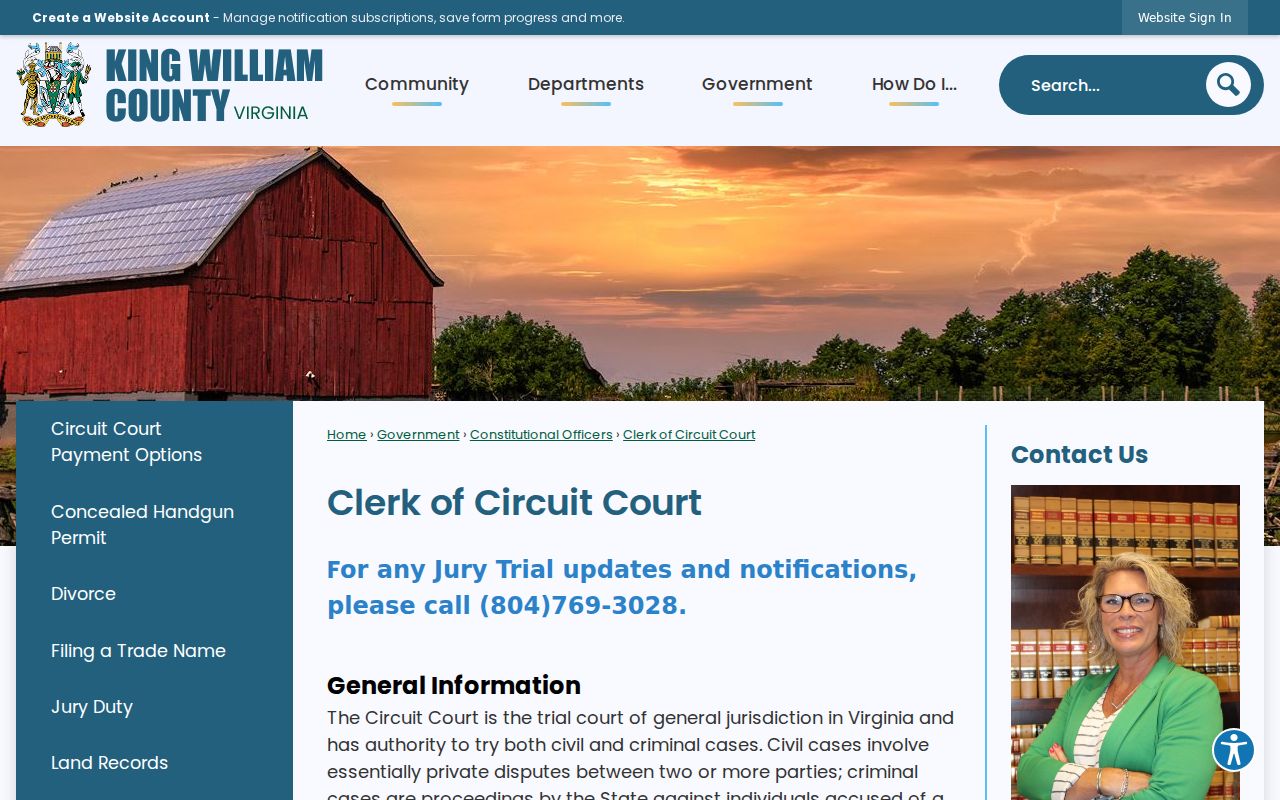
A quick call to the Clerk settles fee and parcel questions before you mail a filing or copy request. Confirming the current fee first avoids returned paperwork. The state directory for the King William Circuit Court also lists the Wills & Deed office and hours.
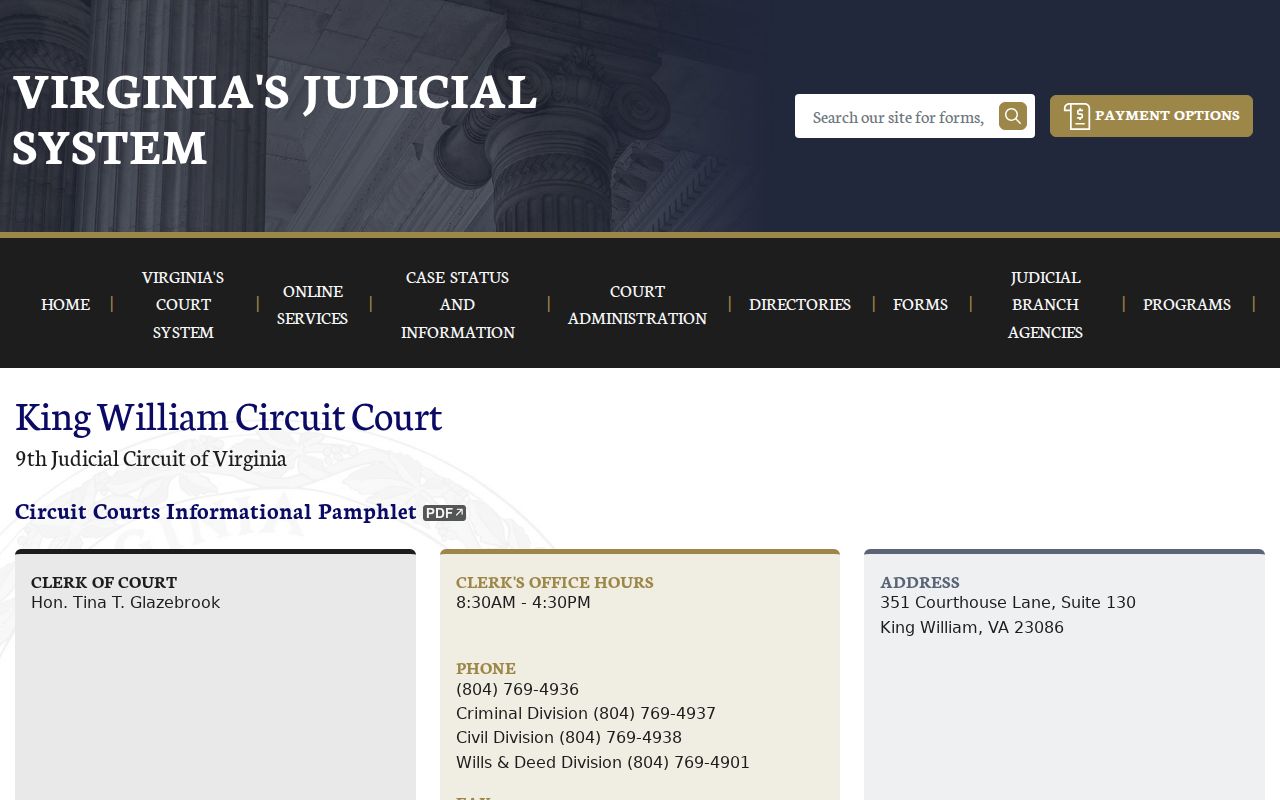
Before an in-person deed or plat request, confirm the public counter location through the court directory.
King William Liens and Releases
A chain review asks one more thing. Does a loan, judgment, or other recorded claim sit beside the deed? Search deeds of trust, assignments, certificates of satisfaction, judgments, UCC statements, mechanics-lien releases, and memoranda of lis pendens. Each instrument plays a distinct role. Match a certificate of satisfaction to the deed of trust it releases, and treat an assignment as a change in interest rather than a new land sale. The Clerk's SRA agreement lists judgment and UCC index coverage from 1999, so older items may require the local counter or historic research.
When a property record cites a court case, the Circuit Court civil file can add an order or disposition the land index does not explain. Search by party name, parcel reference, and legal description. A lis pendens flags litigation tied to property. It does not decide who wins. Likewise, a tax delinquency report is neither a lien release nor a foreclosure deed. Keep court papers, land-record instruments, and Treasurer balances as separate evidence.
VADeed Alert for King William
Virginia offers a free monitoring service called VADeed Alert. An owner can enroll a name or Tax Map/Parcel ID and receive notifications when matching land-record activity is recorded. It is a monitoring tool only. It does not replace the deed index or stop a filing. If an alert looks wrong, compare it with the Clerk's instrument and contact the office using a county or state address. Enter the match key with the parcel format preserved.
The system helps most when a parcel carries an unusual owner name or a past transfer that may prompt follow-up. It will not confirm title or interpret the document. Nor does it guarantee an alert for every possible spelling. Review the actual recorded instrument, and raise filing concerns with the Clerk. The official enrollment entry is Virginia VADeed Alert.
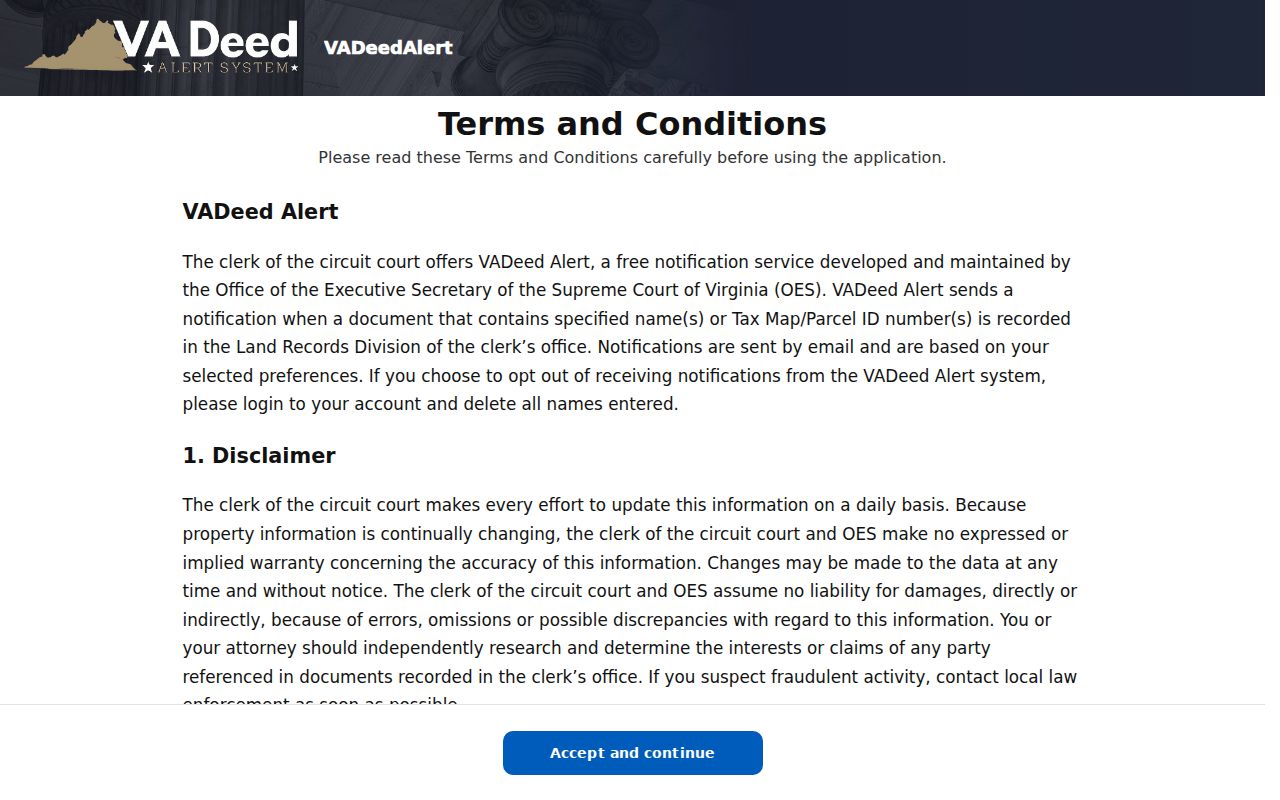
An alert is a prompt to inspect the public record, not an interpretation of the new instrument.
Getting a King William Deed Copy
Use the SRA subscriber image when the instrument falls in an online image range. Your account must have access. Otherwise, ask the Clerk for public terminal or counter help. Visit 351 Courthouse Lane, Suite 130, King William, VA 23086, or call 804-769-4936. The Wills & Deed Division is 804-769-4901. A mailed request should identify the parties and approximate recording date. Include the instrument or book reference and Tax Map Number when known. The county publishes no flat copy-fee table. Confirm the current per-page and certification cost with the Clerk directly.
Records outside the SRA image years live in surviving courthouse volumes. They also live in Library of Virginia microfilm. Plat books are part of the SRA collection. Older books and index reels may need archive assistance. A certified clerk copy differs from a browser printout. Neither by itself replaces a title search across liens, court cases, and prior conveyances.
Recorded, not guaranteed. The King William County deed index reports filed instruments; it does not prove that the chain is complete or every claim has been released. A title professional reviews the broader record.