
King William Tax Record Fields
Assessment and billing sit in separate systems in King William County. The Vision card carries the parcel and value details. Land books add the year and category. Edmunds, the Treasurer's portal, handles bills and payments. So the fields below are grouped by what they describe and where each record lives. A public card explains the tax basis well. But only the Treasurer's current account confirms the amount due or whether a payment posted.
| Field | What It Shows | Where |
|---|---|---|
| Assessed parcel value | Land, building, and total values used in the local assessment | Vision card / Commissioner |
| Fair-market value | Card value tied to Virginia's full-market assessment rule | Vision card / Commissioner |
| Land-use value | Separate value field for a land-use assessment category | Vision card and land-use book |
| Tax bill and status | Charges, payments, and balance for the parcel account | Treasurer / Edmunds |
| Land-book category | County/Town, exempt, or land-use roll by year | Commissioner / posted PDFs |
Virginia Code §58.1-3201 requires assessment at 100 percent of fair market value. That standard has limits. The card reflects the county's assessment process, not a current sale appraisal. A recorded sale price belongs in transfer or deed records instead. From assessed value, the tax bill is a simple calculation. It uses the rate that applies to the parcel. A higher assessment alone proves little. Rates and tax treatment can shift. The final bill may not rise in the same proportion as the card value did.
Finding a King William Tax Bill
Bills and payments run through the Treasurer's e-Treasurer portal. Edmunds is reachable from the county's Tax and Permit Payments page. The PIN on a bill retrieves the account. If the portal cannot find the parcel, use the Tax Map Number from the tax card or other account details. Then ask the Treasurer to confirm. The office sits at 180 Horse Landing Road, Suite 103, King William. It answers at 804-769-4931 during weekday office hours.
- Open the county's Tax and Permit Payments page and follow its Edmunds e-Treasurer link.
- Use the bill PIN when available, then review the year, charge, payment, and balance fields.
- Compare the parcel key and assessment with the current Vision card and applicable land book.
- Ask the Treasurer about a disputed payment or balance; do not treat a delinquent report as a sale notice.
- Assessed value
- The local value used as the starting point for the real-estate tax calculation.
- Land-use value
- A distinct value shown for property in a land-use assessment category.
- Land book
- The annual assessment roll prepared by the Commissioner and copied by the Clerk.
- Delinquent report
- A collection-status record, not a deed or proof that a sale occurred.
King William's 2023 Reassessment
The county's last general reassessment became effective January 1, 2023. King William's code requires reassessment at least every four years. The prior general reassessment was 2015. Those dates describe the countywide cycle. They do not mean every parcel updates on its sale date. Timing questions pull in different records. The assessor card, the latest transfer, and the annual land book each answer something different.
Questions about a card's facts go to the Commissioner of the Revenue. That office can fix factual errors and walk through the values shown. Virginia law also allows written review of assessment records for residential property under four units. Keep the parcel key, assessment year, and any supporting material handy. Staff can then pull the same account.
The official King William reassessment page lists the cycle, effective date, and appeal routes.
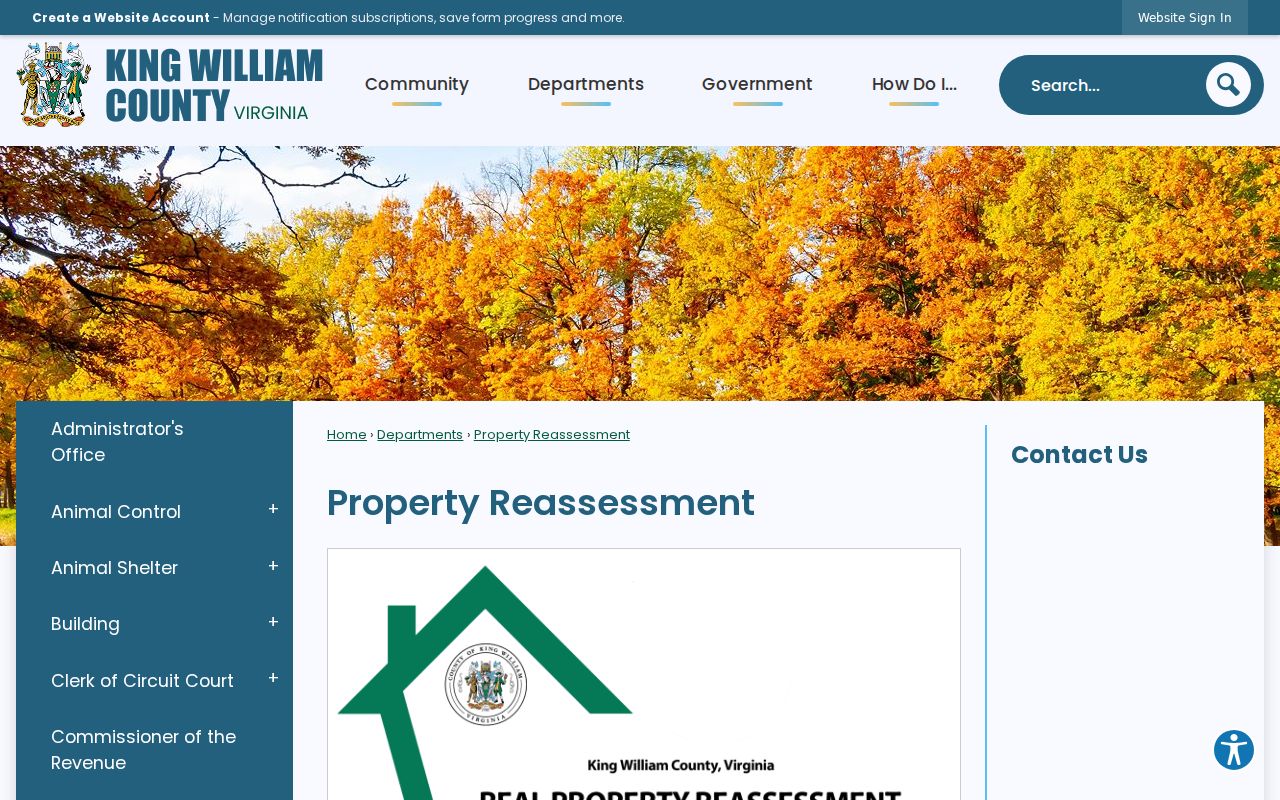
The reassessment page is the county's own explanation of the 2023 valuation cycle and its current correction process.
King William County and Town Rates
King William County and West Point set real-estate rates separately. The county's 2026 rate page shows $0.615 per $100 of assessed value outside West Point. It also shows $0.305 per $100 inside the town. West Point's 2025 ordinance raised its rate from $0.53 to $0.56 per $100. The change was retroactive to January 1, 2025. Remember, these are tax rates. They are not market values. What applies to a parcel depends on its legal jurisdiction. A West Point mailing address or ZIP code does not control it.
For a rough check, divide the assessed value by 100. Then multiply by the rate that fits. Then confirm exemptions, land-use treatment, and the actual bill with the Treasurer. The Town of West Point straddles into King and Queen County. The county line can matter as much as the town label. Rates change, so verify the current rate page for the tax year you need.
Virginia's assessment statute sets the 100 percent fair-market-value rule. The local rate drives the actual calculation.
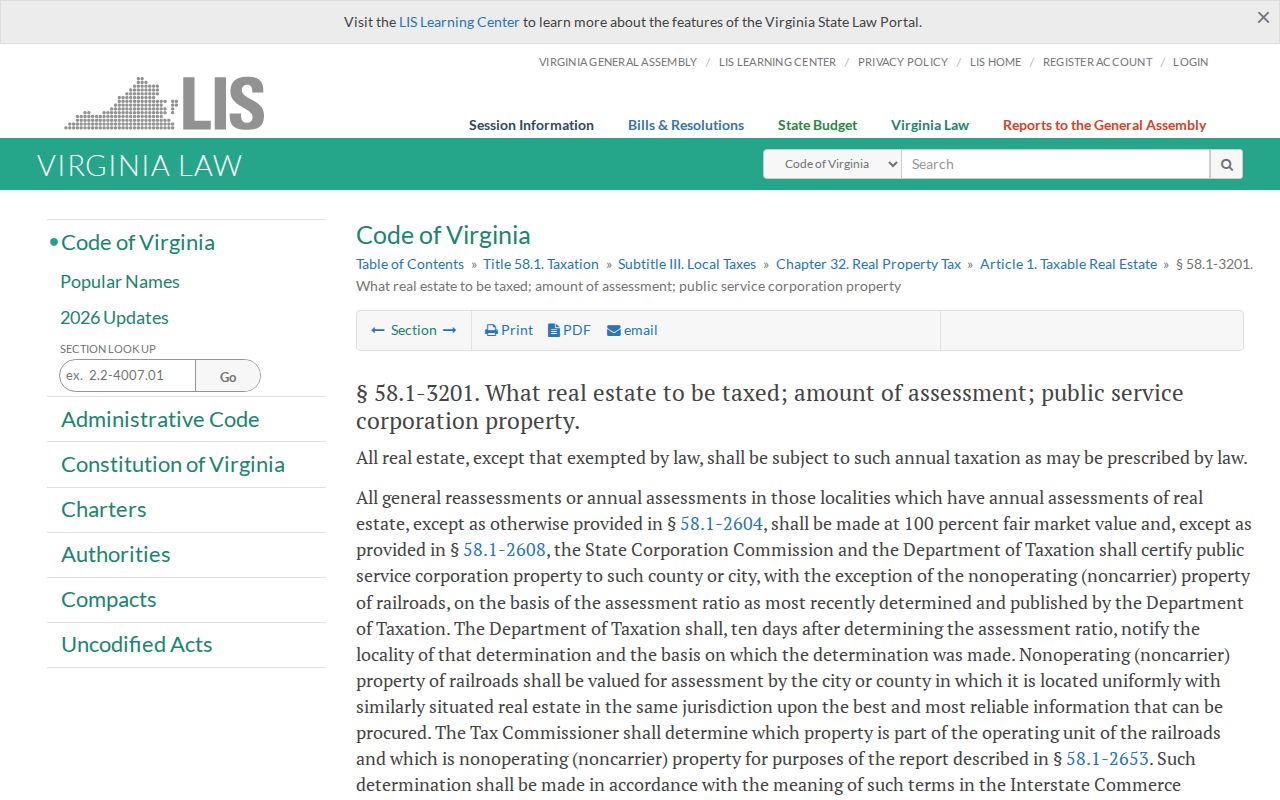
The state rule sets one assessment standard. County and town rates then produce different tax amounts for parcels in each jurisdiction.
King William Tax Dates and Delinquency
County real-estate taxes come due June 25 and December 5. The official 2026 notice says first-half bills were mailed. It imposes a one-time 10 percent penalty plus 0.83 percent monthly interest after the due date. Those figures belong to that published tax-year notice. Check the current Treasurer page before relying on them for a later year. A missed payment starts a collection matter. It is not automatic proof of foreclosure or auction.
The Treasurer's Edmunds portal remains the account and payment source. The county also posts a Past Due Real Estate Taxes report. Note the report date and tax year. Then confirm the balance and payment history with the Treasurer. For a recorded lien, trustee deed, or court action, search the Clerk's land records. Search the Circuit Court file separately. The county publishes no official tax-sale calendar. Do not infer a sale date or redemption deadline from the delinquent list.
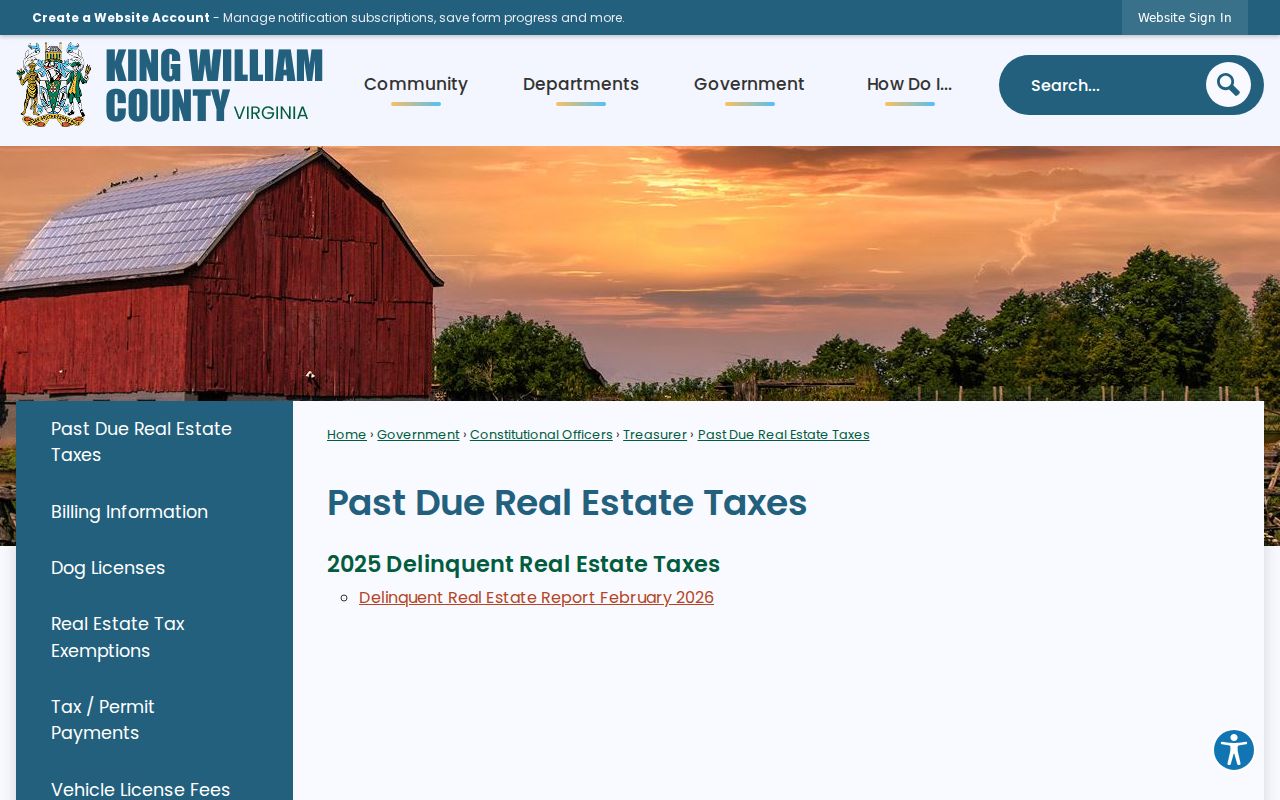
A delinquent report freezes collections at one moment. Match it against a current Treasurer account before acting on any figure it shows.
King William Land Books
King William County publishes land books covering 2020 through 2026. These are sorted into County/Town, exempt, and land-use categories. The Commissioner of the Revenue prepares them. The Clerk keeps copies on file. When a current card leaves you guessing how the tax roll shifted, these books give an annual assessment archive. It is worth mining. Track one parcel identifier through the years. Stay inside the same category too. A County/Town line tells you something different from an exempt or land-use entry. Never treat the three as interchangeable. A land book is not the Treasurer's tax bill. Neither document records a deed transfer. If an assessment line moves, the cause could be a revaluation, a category change, or a parcel split. Each source answers a different question. The land-book page posts PDFs by year. The Vision Field Card carries parcel characteristics and value components. The tax bill shows charges and payments. The Clerk's deed record settles ownership changes. The county's Land Books page lists each year and book category.
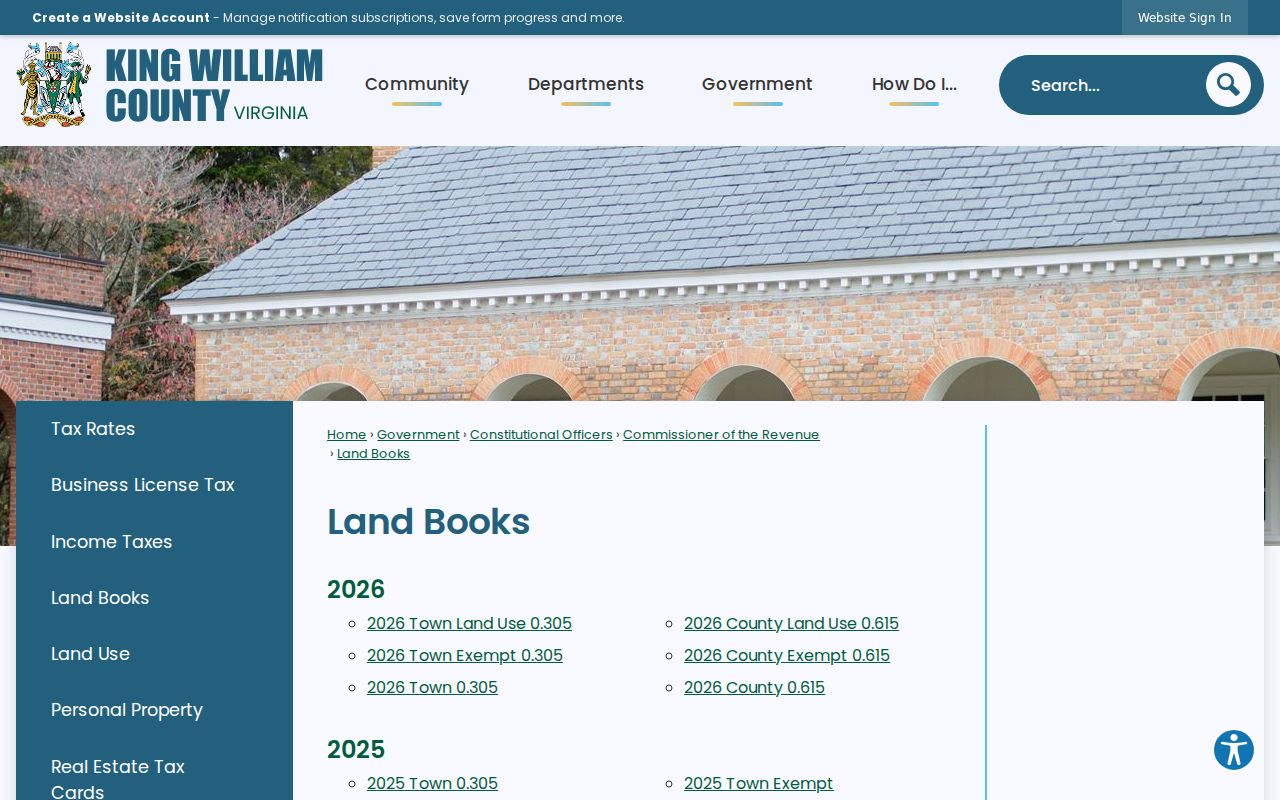
The separate book categories matter. They explain why a tax calculation can diverge from the total assessment printed on a card.
King William Assessment Appeals
The Commissioner of the Revenue can fix a factual error in a property assessment. King William County's page reports on the Board of Equalization. Meetings for the 2023 cycle have ended. A Circuit Court appeal remains the listed route for that cycle. Do not stretch an old notice into a filing deadline. Ask the Commissioner about the applicable assessment year and the current procedure first. Keep your question tied to the parcel and the value in dispute. Virginia Code §58.1-3379 gives the assessor's work a presumption of correctness. An appeal therefore needs evidence. That evidence can show the assessment exceeds fair market value. It can also show a lack of uniformity. Or it can show the assessor skipped accepted appraisal methods. For residential property under four units, the statute offers a written-request path. It covers certain assessment records. The rule allows 15 days for production. Useful material includes the card's land and building components. It also covers comparable assessment data. Add any parcel characteristics supporting a factual correction. Check the county's assessment materials and Virginia's appeal evidence statute against the current official page. Do that before you file.
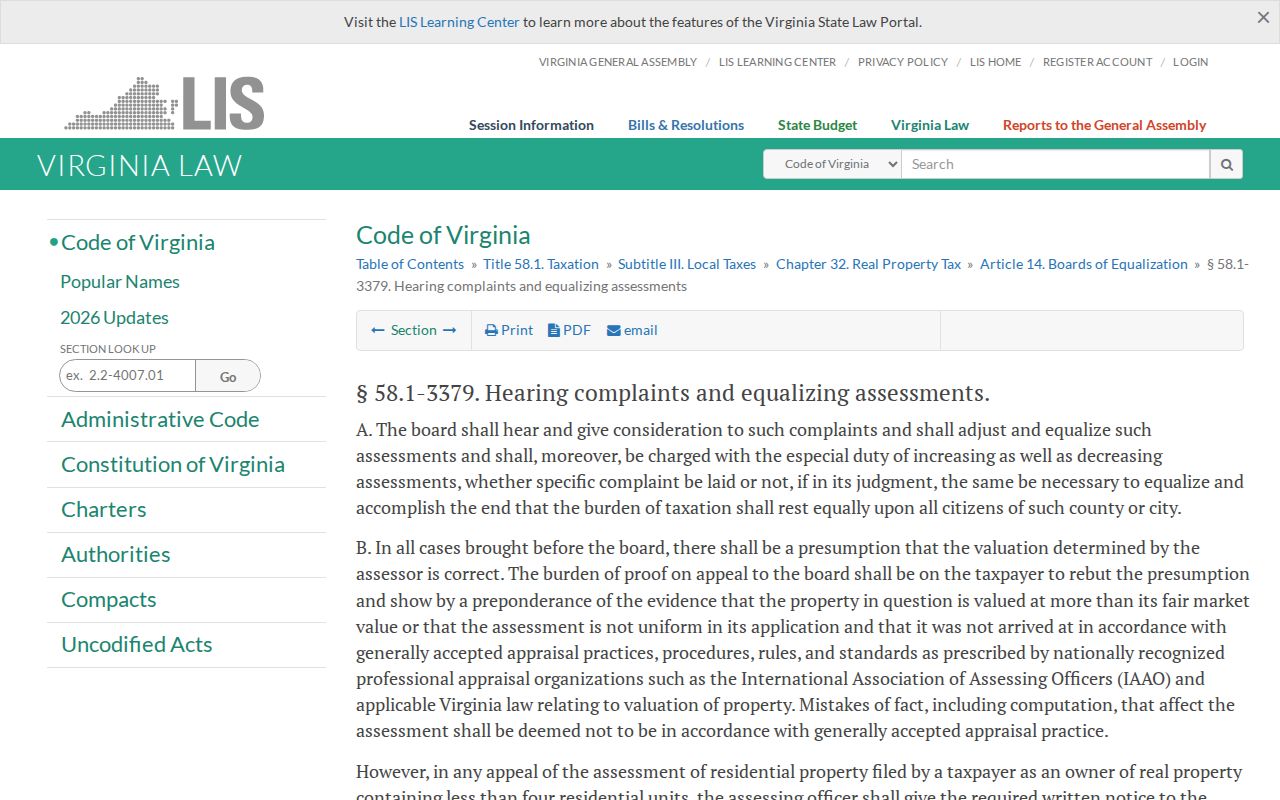
The appeal standard runs on evidence, not frustration. Follow the published page and current clerk or court instructions for any live filing.
Correcting a King William Assessment
Start with the Commissioner of the Revenue at 804-769-4225 or cor@kwc.gov when a card carries a factual error. The office sits at 180 Horse Landing Road, King William, VA 23086, open weekdays 8:30 a.m. to 4:30 p.m. Have the parcel number and supporting data ready. Correcting a card is one thing. Formally appealing a value is another. Per the county page, the 2023 Board of Equalization cycle has already closed. For a court appeal or a written assessment-record request, rely on the current county instructions and the Virginia Code. The appeal calendar does not mirror the billing calendar. Roles stay separate here. The Treasurer confirms amounts and payments but never sets assessed value. The Commissioner handles assessment questions. The Circuit Court stands as the listed appeal route after the board process the county describes.
Appeal window. The county reports that the 2023 Board of Equalization meetings have ended. Ask the Commissioner or Circuit Court about the live deadline and route for the assessment year involved.